
Can You Waterproof Without Hacking Tiles in Singapore?
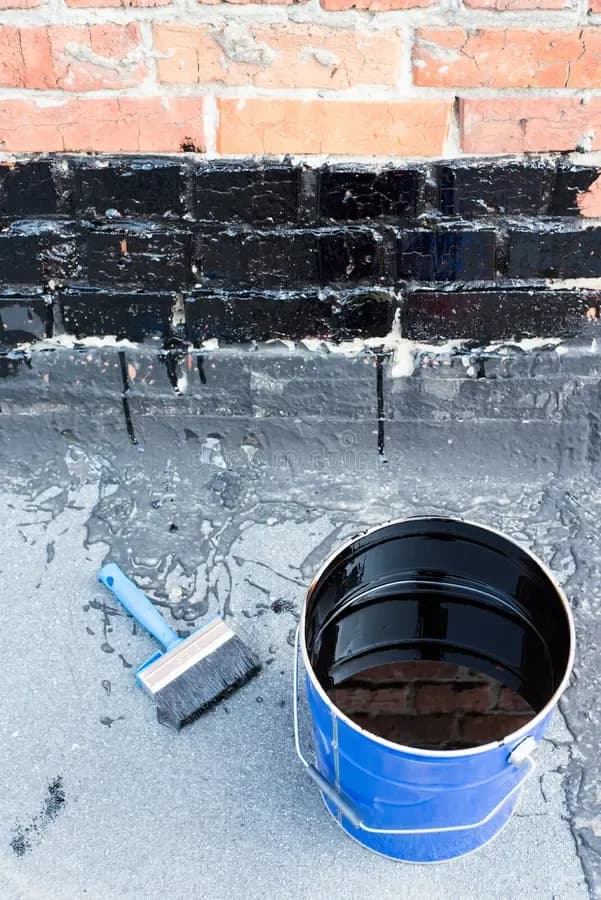
Yes. Some bathroom leaks in Singapore can be repaired without hacking or removing the existing tiles. The right option depends on where the water is entering and whether the waterproofing layer beneath the tiles is still working.
For example, damaged grout, worn silicone joints or a localised crack may be suitable for a targeted repair. A contractor may consider re-grouting, joint resealing, polyurethane (PU) injection or a suitable penetrating sealer. These methods can reduce disruption when the underlying structure and tile bed remain sound.
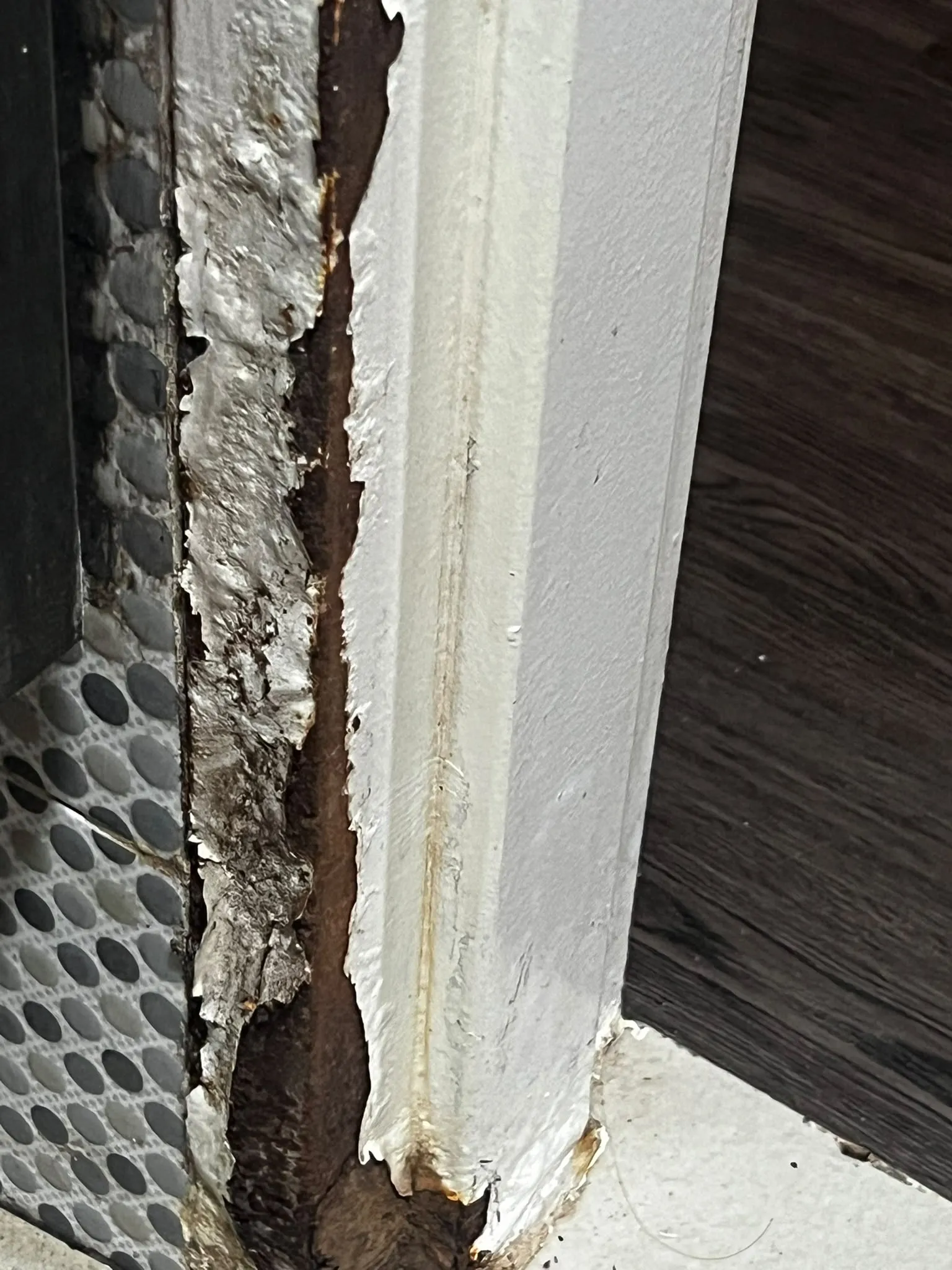
What does waterproofing without hacking tiles actually mean?
Traditional bathroom re-waterproofing usually involves removing the floor tiles and screed, preparing the exposed substrate, applying a new waterproofing membrane, reinstating the screed and tiles, and checking the completed work. Hacking is disruptive, but it allows the contractor to reach the layer that may have failed.
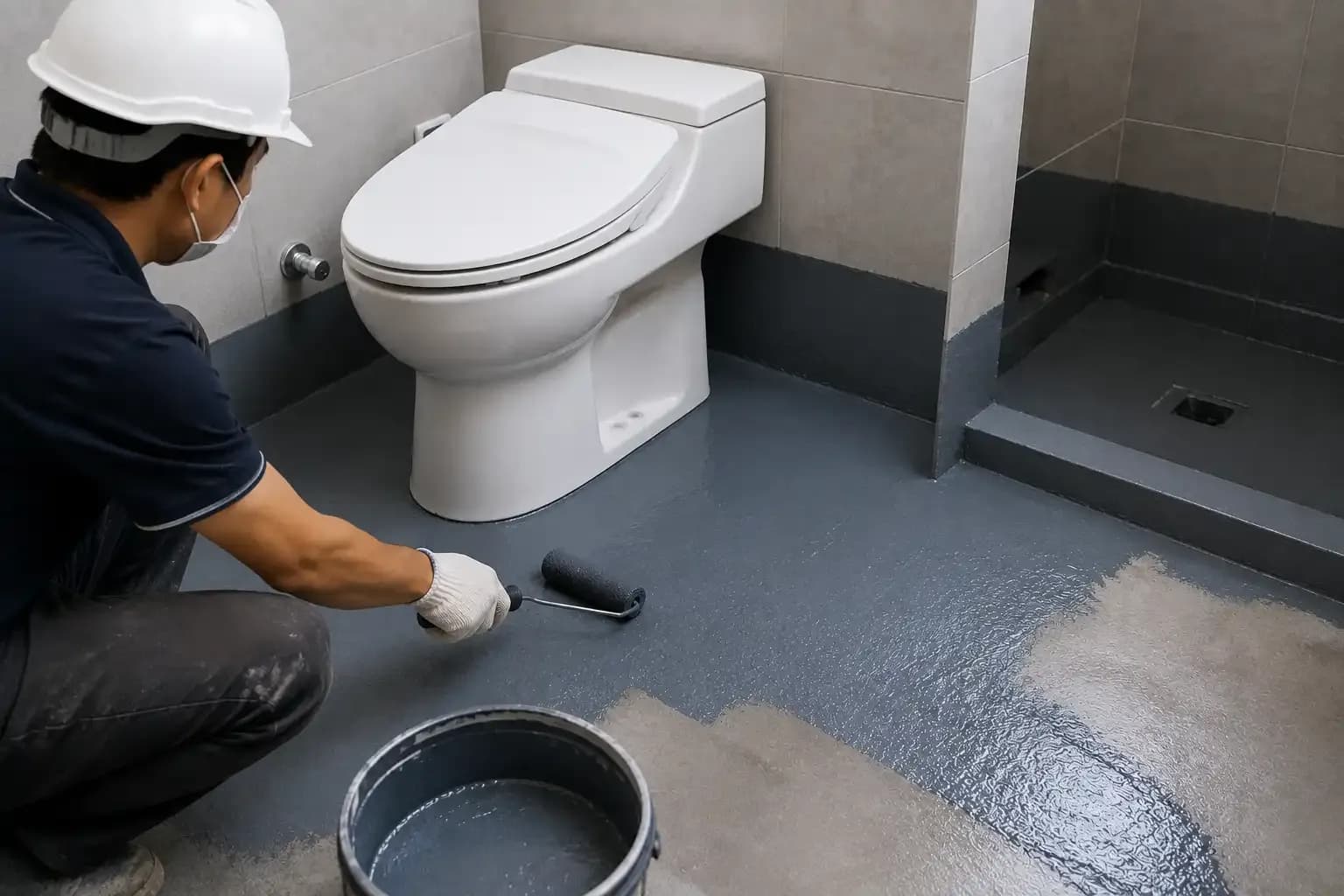
A no-hacking repair tries to address the leak while retaining most or all of the existing tile finish. Depending on the defect, this may involve renewing grout or silicone, injecting chemical grout into a crack, applying a compatible surface treatment, or installing a specified overlay system.
One distinction matters: tiles and grout are the visible finish. The waterproofing membrane is normally concealed beneath the floor finish. A product that makes the tile surface water-repellent does not automatically rebuild a damaged membrane underneath it.
When can bathroom waterproofing be done without hacking?
1. The leak is coming through worn grout or silicone joints
Grout lines and silicone joints around shower screens, kerbs, corners and fittings can deteriorate. If inspection confirms that the main membrane is still sound and the water is entering through a limited surface defect, removing the damaged grout or silicone and renewing it may be enough.
This is a targeted joint repair, not a full replacement of the waterproofing system. It is less likely to solve a leak that continues beneath the floor or appears on the ceiling below.
2. There is a localised crack or water path suitable for PU injection
Polyurethane injection, often described as PU injection or chemical grouting, is used to seal certain cracks and water paths in concrete. A suitable resin is injected into the identified location, where it reacts or expands according to the product specification and helps block water movement.
This can be useful when the defect is localised and the injection route is accessible. It does not automatically recreate a continuous bathroom membrane, including the upturns and details around the floor trap, pipes and wall junctions. The contractor should explain exactly what is being injected and why.
3. The substrate is sound and a penetrating sealer is appropriate
Some penetrating waterproofing treatments are designed to enter porous mineral surfaces, grout or masonry and reduce water absorption. They may be considered for mild seepage where the tiles are firmly bonded and the substrate is suitable for the selected product.
A penetrating sealer is not the same as a flexible waterproofing membrane. It should not be expected to bridge moving cracks, repair loose tiles or replace a failed membrane. Ask for the product data sheet, surface-preparation requirements, curing time and written limitations before agreeing to the work.
4. A compatible overlay system is suitable for the bathroom
An overlay waterproofing membrane system (OWMS) or other specified overlay treatment may allow a new waterproofing layer or finish to be installed without removing every existing tile. The suitability depends on the system design, tile adhesion, floor level, drainage falls, door threshold and compatibility with the existing surface.
An overlay can change the finished floor height. The contractor should check the floor trap, bathroom entrance, shower area and adjoining floor levels before recommending it. Do not assume that every coating sold as a waterproofing product is suitable for an occupied bathroom floor.
When is hacking usually the more reliable option?
Hacking is more likely to be necessary when the defect is within the concealed waterproofing build-up rather than at the visible surface. Warning signs include:
Several tiles sound hollow when tapped, or tiles are lifting, cracked or moving.
Water continues to appear below after grout and silicone joints have been repaired.
There is persistent seepage across a wide area rather than one identifiable joint.
The screed is damp or deteriorated, or the floor has a history of repeated failed repairs.
Water ponds because the floor falls or drainage details are defective.
There is visible spalling concrete, exposed reinforcement or another sign of structural deterioration.
In these conditions, applying a coating over the existing tiles may hide the symptom without restoring the failed waterproofing layer. HDB’s ceiling-leak guidance describes re-screeding as a repair method that removes floor tiles and screed, applies a new membrane and reinstates the floor. It also lists other methods, including PU injection, flood infusion, overlay waterproofing membrane systems and nano-waterproofing materials, for discussion with a contractor. The method should match the actual defect, not simply the preference to avoid hacking.
Which no-hacking method may suit your problem?
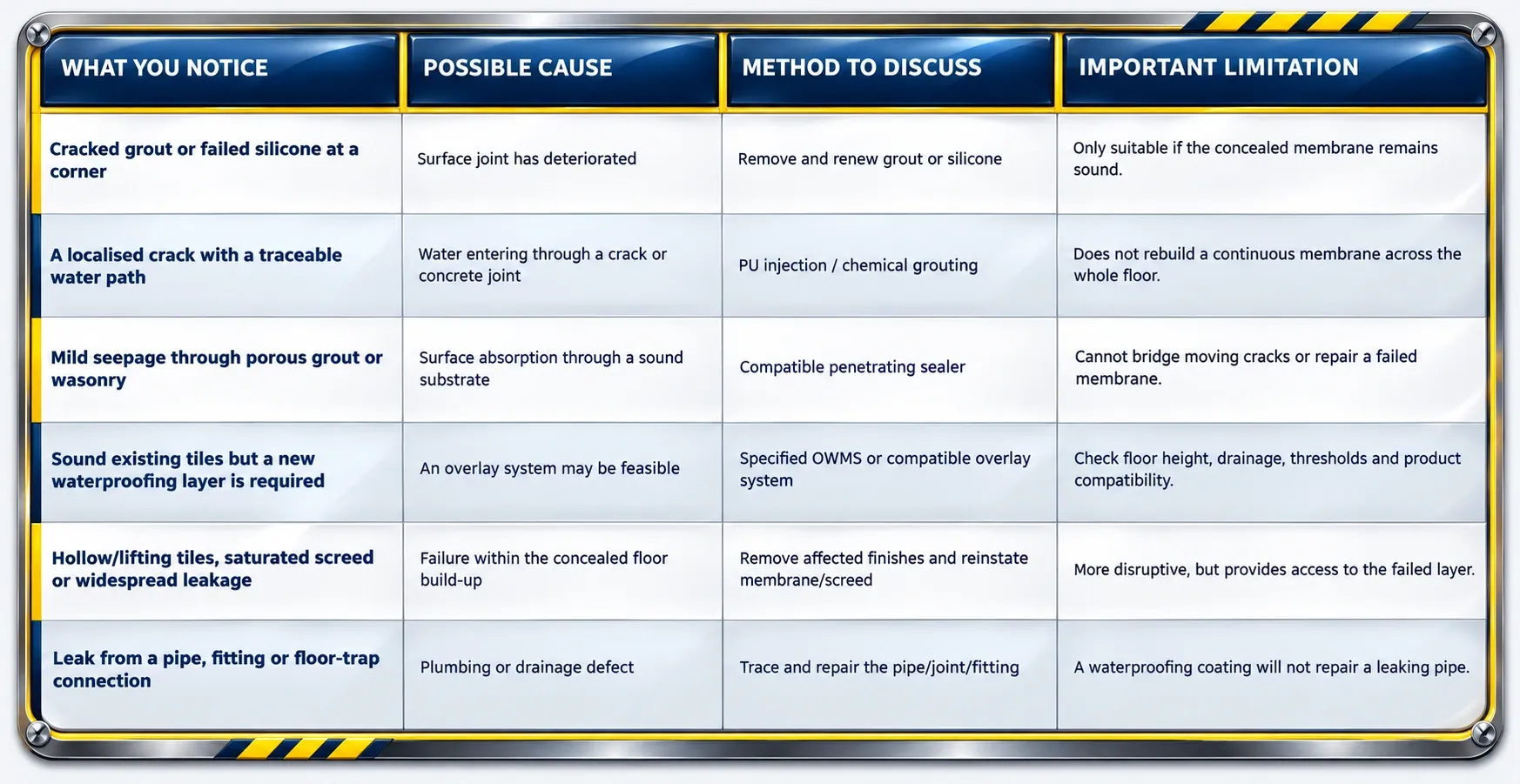
How do you know which repair your bathroom needs?
Do not choose a method based only on the appearance of the stain. Water can travel along a slab, pipe route or joint before it becomes visible. A proper assessment should connect the visible symptom to the actual entry point.
Record when the leak appears. Note whether it happens after showering, flushing, using a basin, or during heavy rain.
Inspect the visible finishes. Look for cracked grout, failed silicone, loose tiles, damp skirting, mould and water around the floor trap.
Check for plumbing issues. A leaking supply pipe, sanitary connection or fitting needs plumbing diagnosis rather than a tile coating.
Trace the moisture path. The contractor should inspect the wet area and, where accessible, the affected ceiling or wall below. Moisture readings and other suitable tests may help.
Agree on the repair method. Ask the contractor to identify the suspected defect, explain why the selected system can address it, and state what it will not fix.
Verify the completed work. Ask what water test or performance check is appropriate, how long curing takes, and when the bathroom can return to normal use.
For a suspected pipe leak, use a plumbing specialist. HDB’s pipe-maintenance guidance advises engaging a licensed plumber where water-pipe repairs are needed.
What HDB homeowners in Singapore should check
HDB bathroom works have specific requirements. If you own a newly built BTO flat, HDB’s renovation guidance states that you must wait three years before removing the toilet wall or floor finishes provided by HDB or the developer. The guidance explains that this protects the waterproofing in wet areas. It also notes that new finishes may be overlaid using adhesive, subject to the applicable guidelines.
This restriction does not mean that a leak should be ignored. If a bathroom is leaking, contact HDB or the relevant parties and ask a qualified contractor to confirm what repair is permitted for your flat and situation. HDB also states that permits are required for certain floor-finish removal or floor-raising works. Requirements can depend on the proposed work, so confirm them before starting.
For inter-floor ceiling leaks in HDB flats, HDB explains that the upper and lower flat owners may need to arrange the repair together and share costs when the floor or ceiling slab needs repair. If the source is common property, such as a roof leak affecting the top floor, contact the Town Council.
Does waterproofing without hacking cost less?
It can cost less when the defect is genuinely localised and the existing floor build-up can remain. Re-grouting or renewing a joint is usually a smaller scope than removing tiles, screed and fittings, then rebuilding the waterproofing system.
However, a low initial price is not good value if the treatment does not reach the source of the leak. Repeated surface repairs can add cost and delay a proper fix. A full re-waterproofing job may have a higher upfront cost but can be more appropriate when the concealed membrane has failed.
The final price depends on the affected area, access, tile and screed condition, plumbing involvement, selected system, surface preparation, testing and reinstatement. Ask for an itemised quotation rather than relying on a generic price per bathroom.
Before accepting a quote, confirm whether it includes inspection, preparation, materials, labour, testing, reinstatement, debris removal, curing time and a written warranty. Ask what the warranty covers and what conditions are excluded.
Common mistakes to avoid
Applying a clear coating over dirty, damp or loose tiles without checking whether the product is suitable.
Assuming that new grout will fix a failed membrane beneath the screed.
Treating the ceiling stain instead of finding the water entry point above or along the slab.
Accepting a no-hacking promise before the contractor has inspected the floor, joints, pipes and affected area.
Ignoring hollow tiles, persistent dampness, active dripping or signs of spalling concrete.
Starting HDB renovation work without checking the applicable permit and finish-removal requirements.
What should you ask a waterproofing contractor?
Where do you believe the water is entering, and what evidence supports that diagnosis?
Is the problem in the grout, silicone, pipework, concrete crack, screed or waterproofing membrane?
Why is the proposed no-hacking method suitable for this specific defect?
What happens if the leak is caused by a failed membrane beneath the tiles?
Which product or system will be used, and can I see its technical data sheet?
What preparation, curing time and post-repair test are included?
What exactly does the written warranty cover, and for how long?
A responsible contractor should be able to explain why a repair is suitable and when it is not. Be cautious of guarantees that do not define the treated area, method, test conditions or warranty exclusions.
Frequently asked questions
Can waterproofing be done without removing bathroom tiles?
Yes, in selected cases. Grout renewal, silicone replacement, PU injection, penetrating sealers or a suitable overlay system may work when the defect and substrate are appropriate. If the concealed membrane has failed extensively, removing the affected tiles and reinstating the membrane may be necessary.
Is PU injection effective for bathroom leaks?
PU injection can seal certain cracks and water paths in concrete without removing the floor tiles. It is not a universal replacement for a continuous waterproofing membrane. The contractor must confirm that the leak source is suitable for injection.
Can I apply waterproofing coating over existing tiles?
Some products and overlay systems are designed for existing tiled surfaces. Suitability depends on tile adhesion, surface preparation, drainage, floor height and the product specification. A coating should not be assumed to repair a failed membrane beneath the tiles.
How do I know if my bathroom waterproofing membrane has failed?
Possible signs include recurring leakage to the unit below, persistent dampness, hollow or lifting tiles, deteriorated screed and seepage that continues after joint repairs. These signs need inspection because pipe or floor-trap defects can cause similar symptoms.
When is hacking necessary for bathroom waterproofing?
Hacking is often needed when the membrane or screed has failed across the wet area, tiles are loose or hollow, or the floor needs to be rebuilt to correct drainage. Removing the finishes gives access to the concealed waterproofing layer.
Can new BTO bathroom tiles be hacked in Singapore?
HDB’s guidance says owners of newly built BTO flats must wait three years before removing the toilet wall or floor finishes provided by HDB or the developer. Check the current requirements for your block and proposed repair before work begins.
Who is responsible for an HDB ceiling leak between two flats?
HDB says the upper and lower flat owners may need to arrange the repair together and share costs when the floor or ceiling slab needs repair. If the leak comes from common property, contact the Town Council.
How long does no-hacking waterproofing take?
Timing depends on the method, preparation and curing requirements. A localised repair may take less time than a full membrane replacement, but the contractor should confirm when the bathroom can safely be used again.
Need help with a bathroom leak in Singapore?
If water is appearing on your bathroom floor, wall or the ceiling below, the first step is to identify the source. A surface repair may be suitable for a localised joint or crack, while a failed waterproofing membrane needs a different solution.
Rubel Builders SG provides waterproofing services for HDB flats, condominiums, landed homes and commercial properties in Singapore. Its published bathroom waterproofing scope includes removing failed finishes, applying a new membrane, water testing and re-tiling where required. View Rubel Builders SG waterproofing services to understand the available service scope, or contact the team to discuss the leak and request a quotation.
You might also like
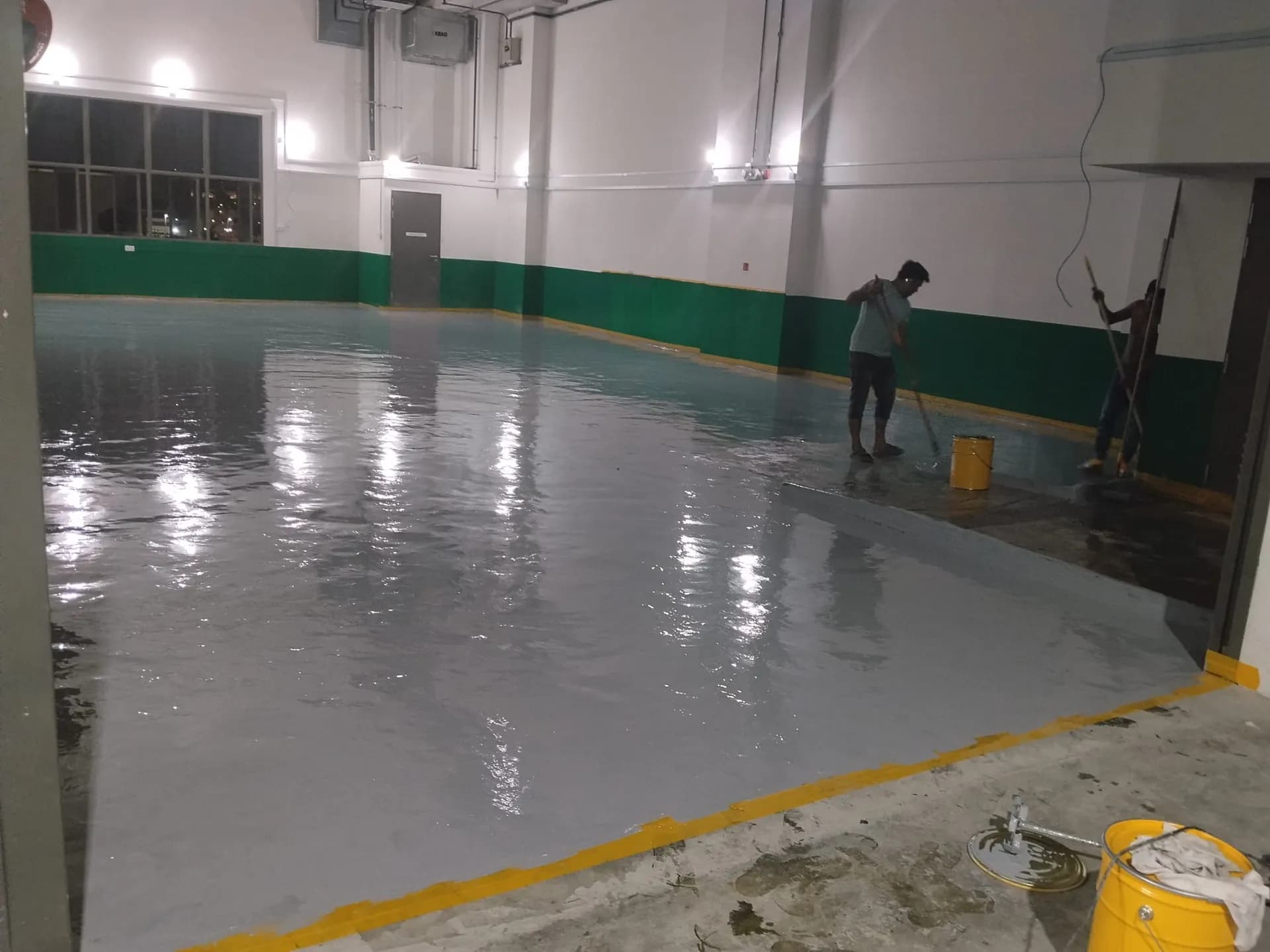
Bathroom Waterproofing Cost in Singapore: 2026 Price Guide
Bathroom waterproofing in Singapore can cost from a few hundred dollars for a limited repair to several thousand dollars for hacking, a new membrane a
Bathroom Waterproofing in Singapore: Signs You Need It and What the Job Involves
Every bathroom relies on a hidden waterproofing membrane under the tiles. When it fails, water reaches the slab and often the ceiling of the unit belo

Lift, Stainless Steel and Mirror Polishing: Keeping Common Areas Looking New
Lifts, lobbies and handrails are the first things visitors notice. Over time, stainless steel picks up scratches, fingerprints and dull patches. Profe